
17.07.2026
Building a medical practice brand: strong brand, more trust

Do you offer high-quality medical services, yet potential patients still compare you primarily based on price, location, or availability? This is often not due to the quality of your practice, but rather a lack of or inconsistent brand positioning. This article shows you how to build a clear practice brand, strengthen trust before the first contact, and stand out from the competition long-term with consistent positioning.

Felix Ixkes
Key takeaways
- A strong practice brand is more than just a logo, colors, and a website; it is built on a clear identity, focused positioning, and a consistent experience across all patient touchpoints.
- A distinct specialization builds trust, improves the quality of inquiries, and reduces price pressure because your practice is no longer perceived as just another interchangeable provider.
- Brand building is only sustainablewhen the entire team embodies the practice's values and promise in their daily work – from the initial inquiry and consultation to follow-up care.
A prospective patient compares three practices online that offer similar treatments. The prices are nearly identical, and she cannot judge the medical quality in advance. However, one practice clearly communicates what it stands for, uses consistent imagery, and conveys a sense of security right from its website. She encounters that same attitude when she calls to inquire. Even though another practice offers an earlier appointment, she chooses the provider she trusts more. It is precisely in these everyday decision-making situations that the impact of a strong practice brand becomes clear.
The building blocks of a strong practice brand
A strong practice brand is built on four foundational pillars:
1. Brand identity and values
These define what your practice stands for, both professionally and personally. This identity forms the basis for all further initiatives.
2. Positioning and unique selling proposition
The practice determines the specific area in which it wants to be recognized and what clearly sets it apart from the competition.
3. Visual identity
Logos, colors, fonts, and imagery ensure recognition and a professional overall appearance across all channels.
4. Storytelling and expert positioning
Professional articles, presentations, and accessible content make the practice's expertise visible and build trust.
Consistency across all channels
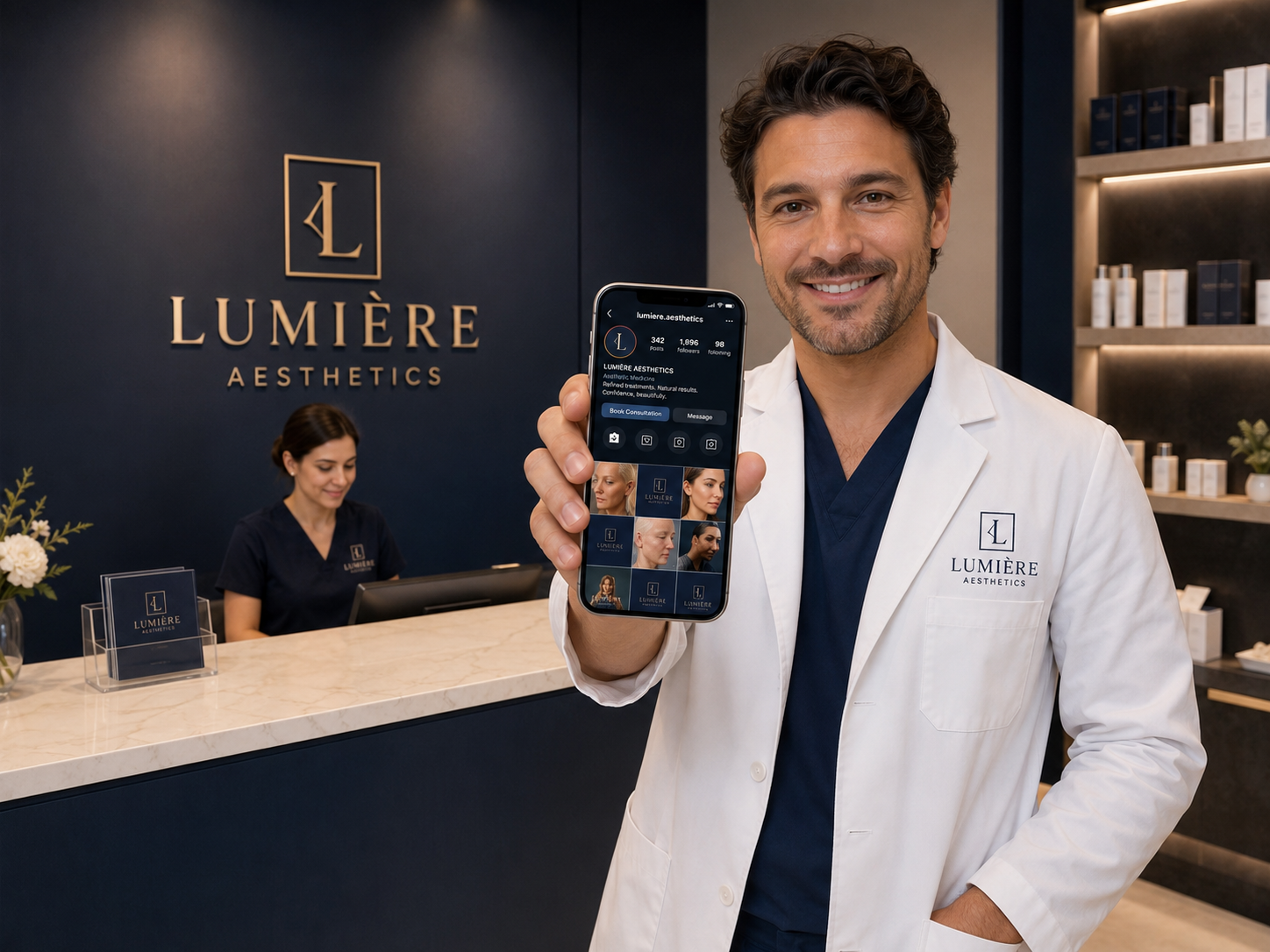
A brand is not created on the website, but in the Sum of all touchpoints. This includes the initial Google search, the call to the reception, the wait in the reception area, the consultation, the follow-up care, and even the invoice. At each of these points, the practice confirms or refutes the promise its brand makes.
The most common disconnect occurs between external image and reality.
A practice may position itself online as a premium provider – but if the phone is answered unfriendlily or it takes three days to respond to an inquiry, the brand promise falls apart immediately. Brand management therefore also means designing invisible processes to align with your positioning. Consistently friendly, competent phone support is often more effective for your brand than additional advertising spend.
It is useful to go through the most important contact points from the patient's perspective and check at each one whether it supports the desired perception. Weak points are usually not found in the obvious, but in the incidental – an outdated confirmation email, a neglected waiting room, or directions that no one has updated.
Anchoring the brand within the team
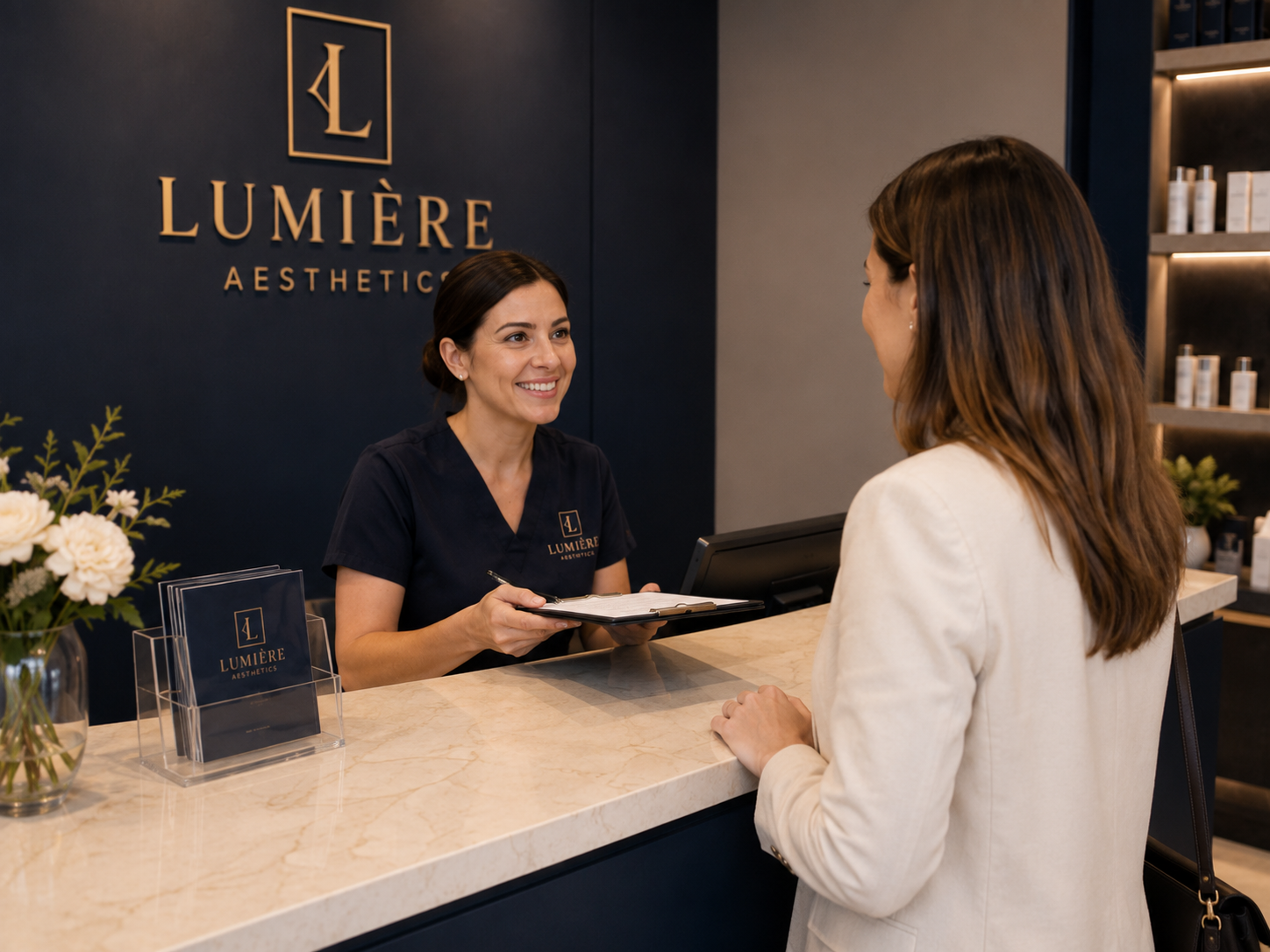
A brand that exists only in the marketing department remains a facade. Patients experience the brand primarily through the team – through the way they speak at the reception, how consultations are conducted, and how complaints are handled. Building a brand is therefore always an internal task, not just an external one.
In practical terms, this means defining the core message and values of the practice in a way that everyone on the team understands and can apply in their day-to-day work. If the positioning is "natural, subtle results," this attitude should also be reflected in the consultation process—for example, by actively advising against excessive treatment. Such lived moments shape the brand more effectively than any image campaign because they are credible and worth sharing.
How brand strength impacts the bottom line
Building a brand might sound like a soft topic at first, but it has tangible business effects. Three of these can be observed regularly in practice.
First, the quality of inquiries increases: A clearly positioned practice primarily attracts patients who are a good fit for its specialization, which reduces the time spent on consultations and increases the conversion rate.
Second, price pressure decreases. Those who trust a brand are less likely to ask for discounts and more likely to accept premium pricing.
Third, the share of referralsgrows, which are particularly valuable because they come with a high level of pre-existing trust and incur almost no acquisition costs . These effects add up. A practice that achieves ten percent higher prices, closes five percent more consultations, and has a growing share of referrals significantly improves its bottom line—without adding a single treatment room. It is precisely this leverage that makes brand building an investment rather than a cost factor.
Typical mistakes in brand building
Several recurring mistakes hinder brand building or render investments ineffective:
- Design over strategy: A new logo is commissioned before the positioning is clear. The result looks neat, but says nothing.
- Arbitrariness out of fear of missing out: If you try to appeal to every patient, you appeal to no one. A brand is built through focus, not completeness.
- Inconsistency across channels: A high-quality website paired with a neglected social media profile—such disconnects undermine a premium promise.
- Neglecting the internal side: A strong external image that the team doesn't embody is exposed during the first real interaction.
- Impatience: Brand impact is built over months. If a new positioning is changed again after just a few weeks, the process starts all over again.
Conclusion
Brand building for medical practices is not a cosmetic add-on, but the foundation for predictable growth in a market where medical quality alone is no longer enough to stand out. A clear identity, a focused positioning, a consistent appearance across all touchpoints, and credible content ensure that a practice is sought out rather than compared. Building this takes patience and a team that embodies the brand – and it pays off in higher-quality inquiries, less price pressure, and more referrals.
Brand building is not a marketing project. It is a growth strategy.
Let’s analyze how your practice is perceived and what potential a clear positioning holds for your economic success.
FAQ
Frequently asked questions about brand building in aesthetic medicine
Hier finden Sie Antworten auf die wichtigsten Fragen
How long does it take for a practice brand to have an impact?
Initial effects – such as clearer inquiries – often appear after just a few months. A noticeable brand impact with recognition and referrals usually builds up over six to twelve months of consistent implementation. Consistency is more important than speed.
Is brand building also worthwhile for small, solo practices?
Yes, especially for them. Small practices can score points through a clear specialization that large providers with a broad range of services cannot credibly claim. A sharp profile is often the most effective lever when the advertising budget is limited.
What is the difference between a brand and a logo?
A logo is a single visual element. A brand is the entire image that forms in a patient's mind – based on values, communication, demeanor, and experience. The logo is just one visible part of that.
Doesn't positioning exclude too many patients?
It consciously excludes patients who wouldn't be a good fit for the practice anyway, while attracting those who align with the specialization more strongly. This generally increases the quality of inquiries and the conversion rate, rather than reducing the patient volume.
How does brand building fit with legal requirements for medical professions?
Brand building operates within the framework of advertising laws and medical professional regulations. Factual positioning, professional content, and a professional appearance are unproblematic; sensationalist promises of a cure are not. A legal review of your public image is recommended.
Can the success of brand building be measured?
Direct brand impact is harder to measure than an ad, but it is not invisible. Indicators include the share of direct and referral inquiries, the conversion rate, the frequency of price negotiations, and brand awareness in the region.